.jpg)
In the previous week, total reserves increased by $950.9 million to $313.536 billion.

Employment in India saw a V-shaped recovery after being adversely impacted between April and June 2020 during the Covid lockdown and during April-June 2021, when the second wave struck, said Krishnamurthy V Subramanian, former chief economic advisor, in a paper released on Friday. Subramanian is now serving as executive director of the International Monetary Fund (IMF). From the official survey data of the National Sample Survey Organisation (NSSO), the paper titled 'Employment in India: Data Sources, Facts, and Trends' showed that both worker-population ratio (WPR) and labour force participation rate (LFPR) were higher, while the unemployment rate was lower during October-December 2022 when compared to the corresponding quarter in 2019.
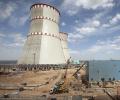
China on Tuesday inked an agreement worth a whopping USD 4.8 billion with cash-strapped Pakistan to set up a 1,200-megawatt nuclear power plant as a sign of increasing strategic cooperation between the two all-weather allies.

India's foreign exchange reserves surged by a healthy $2.788 billion to $343.2 billion in the week to April 17.

Indian-American business leader Ajay Banga is poised to become the next President of the World Bank after the nomination period closed and no country proposed an alternate candidate for the prestigious post. In February, President Joe Biden announced that the US would be nominating Banga to lead the World Bank because he is "well equipped" to lead the global institution at "this critical moment in history." The World Bank on Wednesday closed a month-long window for nominations for its next president, with no alternatives announced to 63-year-old Banga.

The IMF and World Bank have stopped loans, and the FATF warned its 39 member nations to block Taliban assets.
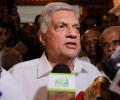
China will not be allowed to use the southern port of Hambantota for military purposes, Sri Lankan President Ranil Wickremesinghe has said, apparently attempting to allay fears in India and the United States about China's increasing maritime presence in the strategic Indo-Pacific region.
Country's foreign exchange reserves dropped by $2.063 billion to $ 335.729 billion in the week to March 13.

Foreign currency assets, a major component of the overall reserves, rose by $1.404 billion to $338.897 billion in the reporting week

Gold reserves in the reporting week increased by $707 million to $33.52 billion.
The economy may grow by around 7 per cent this financial year as estimated by the Monetary Policy Committee (MPC) of the Reserve Bank of India (RBI), say economists with various organisations. The first advance estimates for 2023-24 will be released on Friday by the National Statistical Organisation (NSO), an exercise done for calculating ratios such as the fiscal deficit. The interim Budget will be presented on February 1.

The marginal decline in reserves was on account of fall in foreign currency assets

Finance Minister Nirmala Sitharaman on Tuesday met IMF managing director Kristalina Georgieva and discussed a range of issues, including impact of geopolitical situation on global growth.

The reserves nearing $ 428 billion can take care of imports for almost 10 months, according to market experts.

The country's foreign exchange reserves crossed the $600 billion mark for the first time after increasing by $6.842 billion in the week ended June 4, RBI data showed on Friday. The reserves surged to a record $605.008 billion in the reporting week, helped by a rise in foreign currency assets (FCA), a major component of the overall reserves, as per weekly data by the Reserve Bank of India (RBI). In the previous week ended May 28, 2021, the reserves had swelled by $5.271 billion to $598.165 billion.

India needs to strengthen its economic growth, says IMF.

'We don't have to go abroad for anything.' 'Anyone who thinks we have a lot to learn from the US needs to have his head examined.' 'We are in a new era.'

India's deployment of a direct cash transfer scheme and other similar social welfare programmes is a "logistical marvel", the International Monetary Fund (IMF) said on Wednesday. "From India, there is a lot to learn. There is a lot to learn from some other examples around the world. "We have examples from pretty much every continent and every level of income. "If I look at the case of India, it is actually quite impressive," Paolo Mauro, deputy director of the Fiscal Affairs Department at the IMF, told reporters at a news conference in Washington.

A statement from the finance ministry said, 'it shall be the policy of the Sri Lankan government to suspend normal debt servicing...shall apply to amounts of affected debts outstanding on April 12, 2022'.

International Monetary Fund Chief Economist Gita Gopinath tells Indivjal Dhasmana high-frequency indicators for the third quarter of 2021 indicate momentum in economic recovery in India.

Foreign currency assets rose $1.569 billion to $329.58 billion

The reserves had touched a life-time high of $426.028 billion in the week to April 13, 2018.

With former prime minister Imran Khan in jail, Sharif's Pakistan Muslim League-Nawaz (PML-N) is tipped to emerge as the single largest party in the elections.

'If you look at the order books of capital equipment companies or money deployed on the ground, there is forward movement in terms of actual investment by the private sector.'

The reserves had jumped $2.03 billion to $277.38 billion in the previous week.

The foreign exchange kitty had crossed the half-a-trillion mark for the first time in the week ended June 5, 2020, after it had swelled by $8.223 billion to stand at $501.703 billion.

Citing details of the contract from the American Federal Procurement Data System, the BBC report claimed that Pakistan signed two contracts with American companies named "Global Military" and "Northrop Grumman" for the sale of 155mm shells.
While the Reserve Bank and the Economic Survey of the finance ministry have projected India to grow at 6.9 per cent and 6.5 per cent in current fiscal, the International Monetary Fund estimates it to be 6.6 per cent.

The next annual budget of India will have to be very carefully structured to sustain the country's growth momentum, Union Finance Minister Nirmala Sitharaman said on Tuesday, noting that it will also address inflation concerns. Visiting Washington DC to attend the annual meeting of the International Monetary Fund and the World Bank, the finance minister was responding to a question on the next year's Budget at a fire-side chat with eminent economist Eshwar Prasad at the prestigious Brookings Institute. "Specifics (of the next Budget) may be difficult at this stage because it's a bit too early. "But broadly, the growth priorities will be kept absolutely on the top. "Even as I speak about the concerns that inflation brings before me. So, inflation concerns will have to be addressed. "But then how would you manage growth would be the natural question," Sitharaman said.

Rise in reserves was predominantly on account of increase in FCAs

Reserve Bank of India (RBI) governor Raghuram Rajan says global markets are at risk of a "crash" should investors start bailing out of risky assets created by the loose monetary policies of developed economies.

Gold reserves declined by $346.2 million.
Foreign currency assets increase by $3.902 billion

The reserves had touched an all-time high of $367.16 billion previously

Foreign exchange reserves have hit a fresh high.

The NSE Nifty closed lower by 32.15 points, or 0.32 per cent, at 9,984.80.

Five Indian-origin women executives have made it to Barron's prestigious annual '100 Most Influential Women in US Finance' list for achieving positions of prominence in the financial services industry and helping shape its future. Barron's is a sister publication of the Wall Street Journal, published by Dow Jones and Company. "The list honours established and emerging leaders in financial services, the corporate world, nonprofit organisations, and government," the magazine said in a press release.

Of the eight RBI governors who have held office since the 1991 economic liberalisation, Bimal Jalan had the longest stint and S Venkitaramanan, the shortest. Current Governor Shaktikanta Das will overtake Bimal Jalan before completing his second term in December, points out Tamal Bandyopadhyay.

Reserves had touched an all-time high of $355.46 billion in the week to June 19.

Pakistan is on the verge of strong action by FATF, given its inadequate performance, whereby it managed to pass in only six of 27 items, an official privy to the development said.
